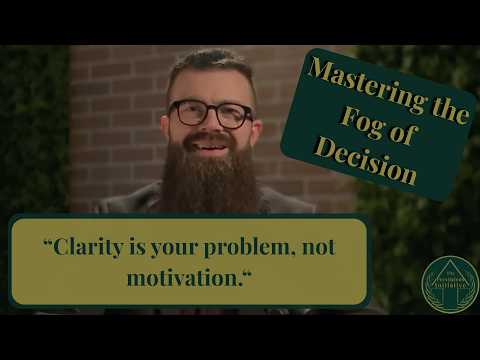
In this episode, we delve into the critical skill of making clear and effective decisions even when you’re experiencing mental fatigue or stress. Discover a framework that transforms your approach to decision-making, backed by real-world examples from my experiences as a martial artist, coach, and parent. Learn actionable steps to enhance daily effectiveness and reduce stress, enabling you to thrive in high-pressure environments.
Imagine it's Friday evening, and you're hit with a barrage of emails, meetings, and deadlines. Suddenly, making even the smallest decision feels like navigating through thick fog. You might think that you just need more motivation or another cup of coffee to clear your mind. But that’s not always enough.
Motivation is not your problem; clarity is. And in this post, I want to introduce a framework for decision-making that can help you navigate those moments when the path ahead feels murky and uncertain.
Define Your Core Objective
The first step is to define your core objective before diving into any specific details or tasks. When we get caught up in the day-to-day grind, it’s easy to lose sight of our broader goals and objectives. By setting a clear goal for each decision you need to make, you create a guiding principle—a north star—that keeps everything focused despite overwhelming conditions.
As I’ve learned from my martial arts training and coaching experiences, having one clear objective can keep things productive even when stress levels are high. It’s not just beneficial for me as a leader but also helps the team understand our common goal. For instance, when you’re dealing with tight deadlines or high-pressure situations, knowing what your core objective is will prevent confusion and wasted effort.
Key Quote: Failing to articulate your core objective clearly can lead to confusion and wasted effort.
Categorize Urgency and Importance
Once you’ve defined your core objective, the next step is to categorize each task based on its urgency and importance. This is where the Eisenhower matrix comes in—a powerful tool for prioritizing tasks efficiently.
The Eisenhower matrix divides tasks into four categories: urgent and important, important but not urgent, urgent but not important, and neither urgent nor important. By using this framework, you can filter out less critical tasks when your mental energy is low or when resources are limited. It’s a great way to prioritize without getting overwhelmed by everything on your plate.
For example, spending too much time on emails that aren’t urgent can derail you from tackling more crucial tasks. To use the Eisenhower matrix effectively, integrate it with other productivity tools like calendar apps. Linking these together helps maintain focus and ensures you know where each task falls in your priority list.
Key Quote: Scheduling regular decision making sessions helps manage both professional and personal responsibilities more effectively.
Implement a Decision Rhythm
The final step is to establish a regular rhythm for reviewing key priorities. Instead of cramming all decisions into one chaotic session, spread them out over manageable intervals. This can be daily, weekly, or monthly depending on what works best for you.
For me, having specific times in the day for making certain types of decisions has been transformative. For instance, I might dedicate mornings to handling professional responsibilities and evenings to personal time with family. By setting clear objectives at different points throughout the day, you avoid overlapping these buckets and can manage your workload more effectively.
This rhythm is essential because it helps prevent decision fatigue and ensures that tasks are tackled methodically rather than reactively. It’s about becoming someone who navigates life with clarity and discipline, no matter what state you’re in.
Personal Takeaway
Reflecting on my journey as a martial arts instructor, coach, father, and entrepreneur, I’ve seen how adopting this framework can improve focus and productivity despite challenging conditions. Whether it’s teaching techniques to students, coaching teams through high-pressure situations, or balancing work with family life, having clear objectives and regular decision-making sessions has made all the difference.
When you adopt these practices, they become part of your identity rather than just something you do. For example, when I’m leading a martial arts class, my team knows exactly what we’re working towards because our core objective is clear. The same applies to managing personal time and family responsibilities—defining objectives and sticking to a decision-making rhythm ensures that everyone involved benefits from the decisions being made.
In conclusion, clarity, structure, and discipline are key when it comes to effective decision-making. Don’t rely solely on motivation; instead, arm yourself with frameworks like the Eisenhower matrix and establish regular decision-making sessions. These tools will help you navigate even the foggiest of states with confidence and purpose.
Join us weekly for deep, unfiltered conversations about personal development, leadership, productivity, and excellence. Each episode is crafted to help you take initiative and unlock your full potential — both personally and professionally
Discover how leading with presence can transform your leadership approach and enhance performance in this episode featuring Jodi Allison Scott. Learn to break free from the cycle of urgency and embrace clarity through mindful moments.
In this episode of The Prestigious Initiative, host Chris interviews author Jamie Turner about his book "Better: A Guide to a New and Improved You." Together, they explore the four Ms—mindset, mentoring, management, and marketing—and how these can be applied for personal and professional growth. Discover practical tools and techniques to perform at your peak and reach your full potential.
In this episode of The Prestigious Initiative, Chris Beane explores the radical concept of turning limitations into strengths with guest speaker Ty Gipson. Known for his pioneering work on resilience and perseverance through adversity, Ty shares actionable frameworks from his 'No Options' mindset approach that challenge conventional beliefs about success and failure. Get ready to redefine your limits and discover practical steps to elevate your performance in both personal and professional realms.